Blog No 8 Ghost Orchid
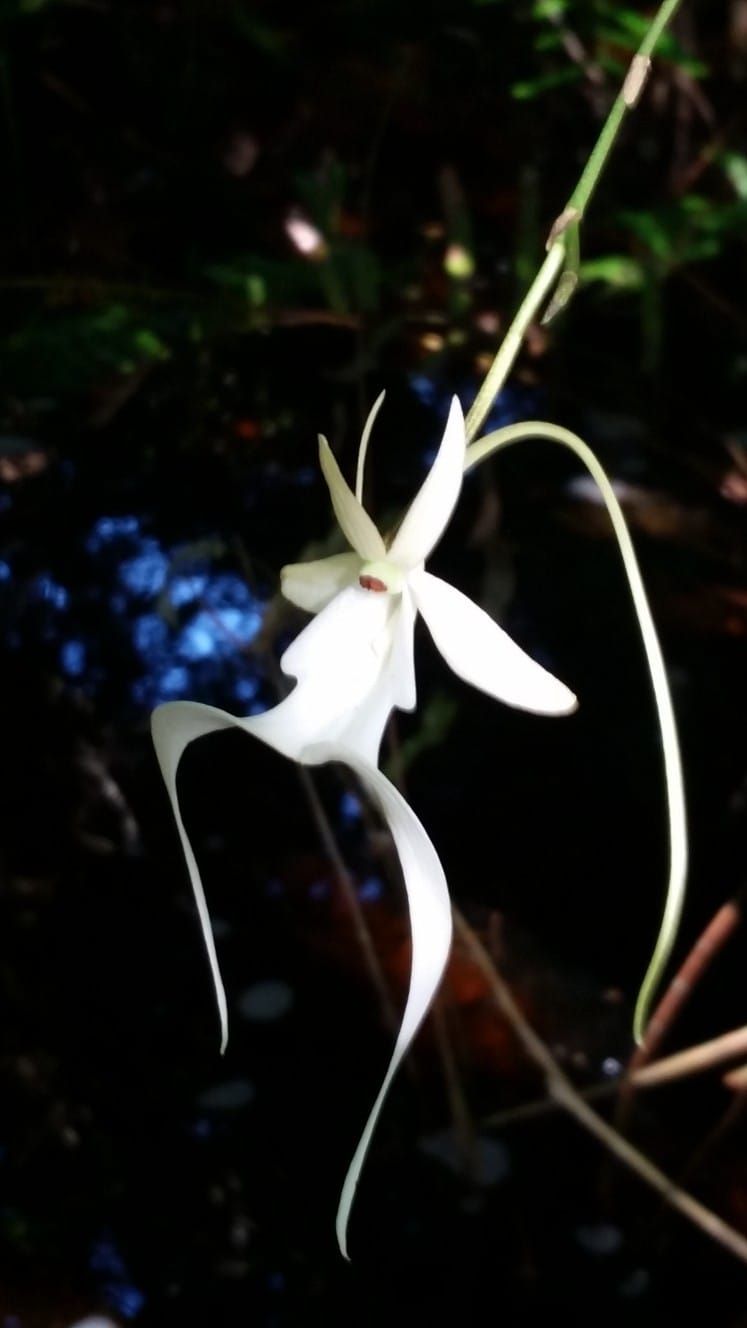
Florida’s ghost orchid (Dendrophylax lindenii) is found only in Florida and Cuba where it requires a highly specialized microclimate to grow and reproduce. When my daughter, Megan, first mentioned a mysterious ghost orchid found in the Florida swamps I had no clue what she was talking about. Due to Megan’s interest in hiking the Florida Trail (few people know about this 1500 mile trail beginning in the Big Cypress Preserve and ending at Pensacola Beach), and through fortuitous circumstances, Megan and I became members of an exclusive club that have seen this orchid in its native habitat. After swearing on pain of death to keep it a secret, we were guided by Megan’s friend to an unmarked spot in the Cypress swamps, and we at once became mesmerized and charmed by these ethereal plants. The orchid is found on the trunks of pop ash, pond apple, and bald cypress trees, usually at eye level up to about 30 feet. The plants typically bloom from June to October, but timing varies year to year based on rainfall. The orchids are notoriously difficult to spot since they seem to float in midair, hence the name 'ghost'. The leafless plant has green roots that attach to the furrowed bark of these trees and is found in humid swamps where the orchid enjoys a symbiotic relationship with certain fungi. The roots are present year round but the orchid’s flower can only be seen during a few months in the summer. Usually we find a single flower, but I have photographed plants with two or three flowers. The famous “Super” ghost orchid in Corkscrew Swamp Sanctuary is about 70 feet above ground in a bald cypress tree and has had up to 15 flowers at once.
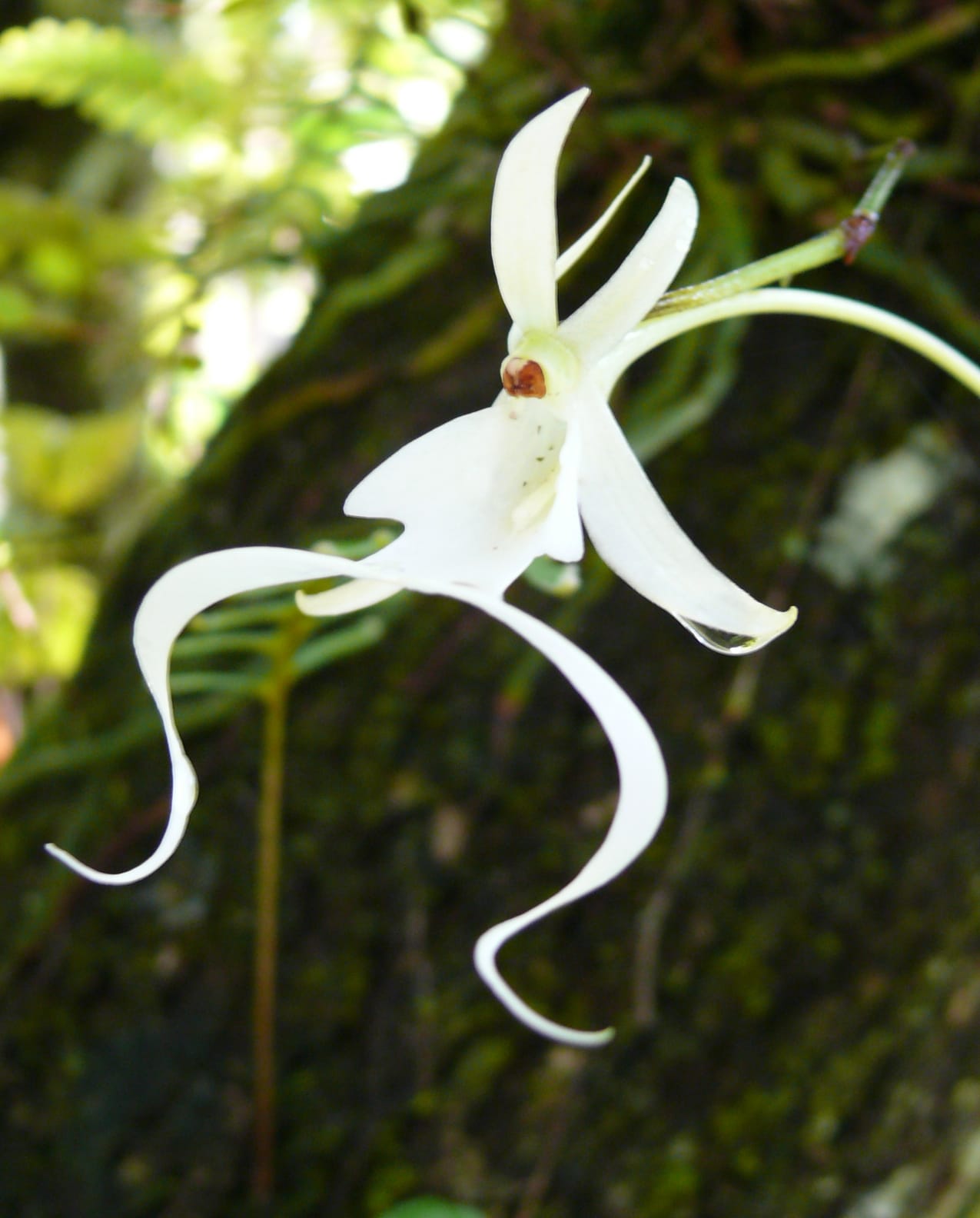
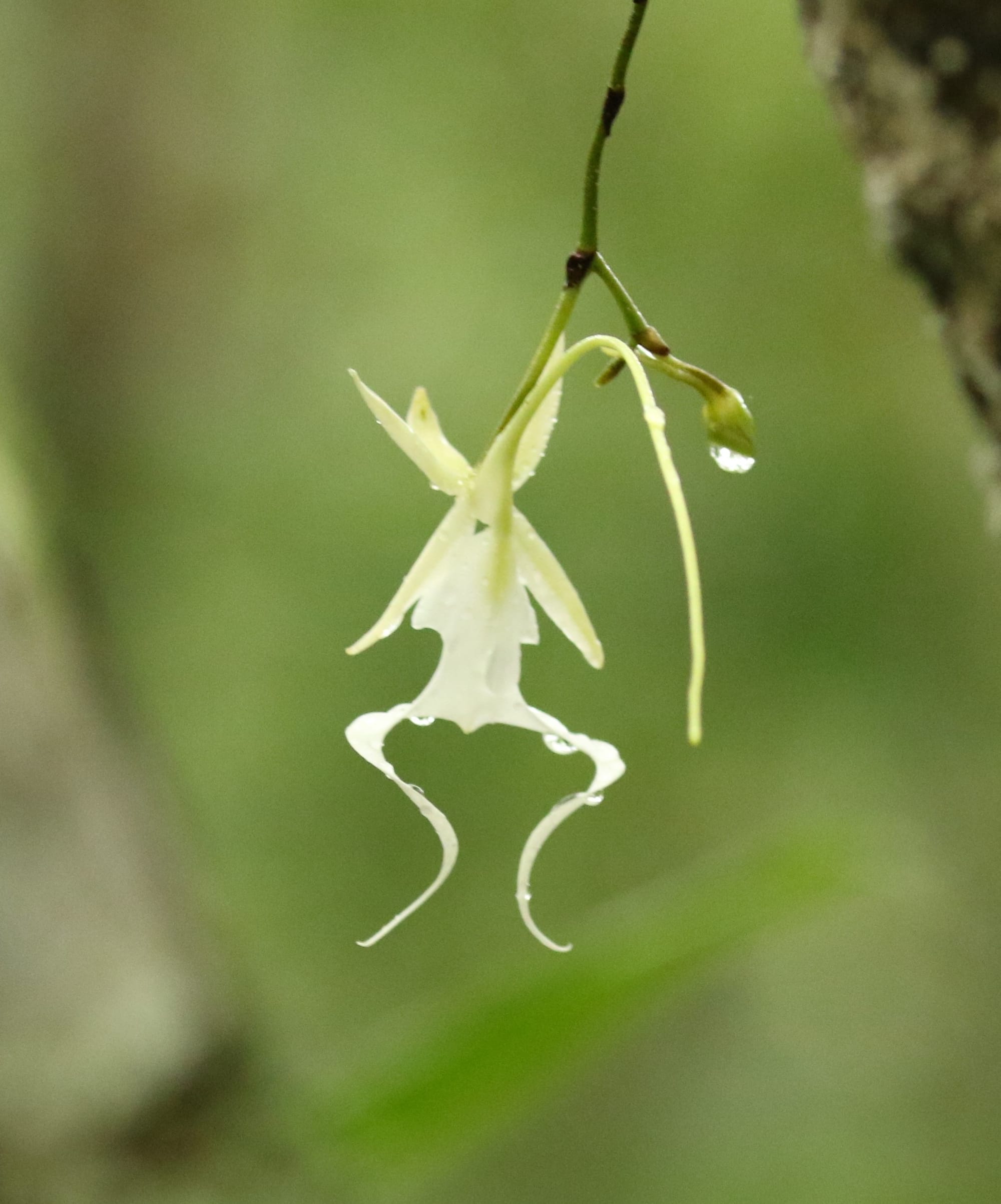
It takes the orchid plant around 7 years to reach maturity to be able to reproduce. The ghost orchid has a specialized tube about 5 to 10 cm long, called a nectar spur in which various species of sphinx moths place their long proboscis to feed on the nectar, and thereby pollinate the orchid. It was long thought that only the giant sphinx moth with a 6 inch wingspan and is said to sound like a miniature jet when flying, could perform this function. Recently, photographers working for National Geographic mounted cameras with remote sensors, and for the first time the moth’s visit to the flowers was documented. These researchers discovered several species of smaller sphinx moths are also involved with the orchid’s reproduction and this comes as good news since the orchid is not dependent solely on the giant sphinx moth for its survival. It is thought that only about 2,000 ghost orchid plants exist in Florida.
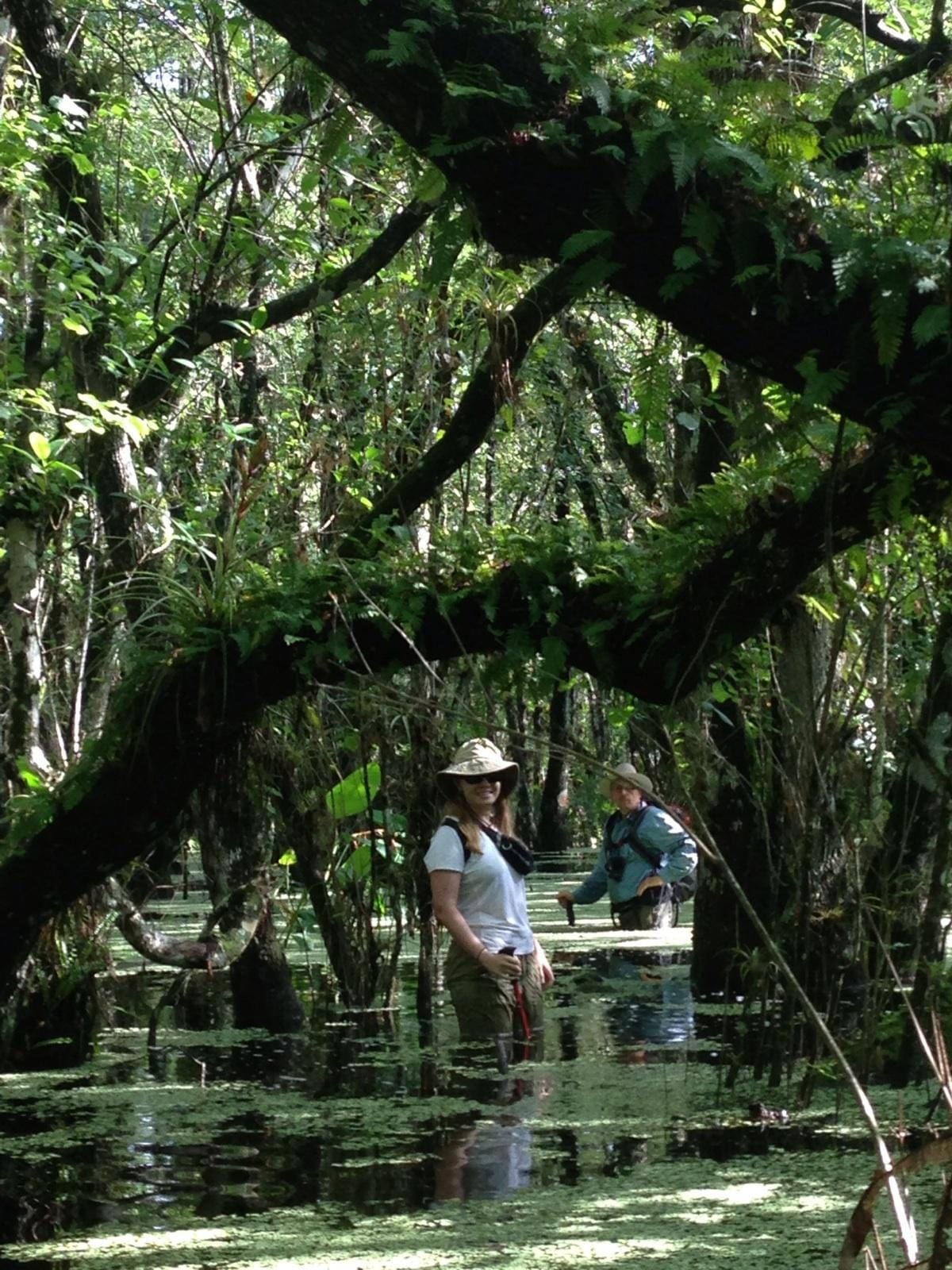
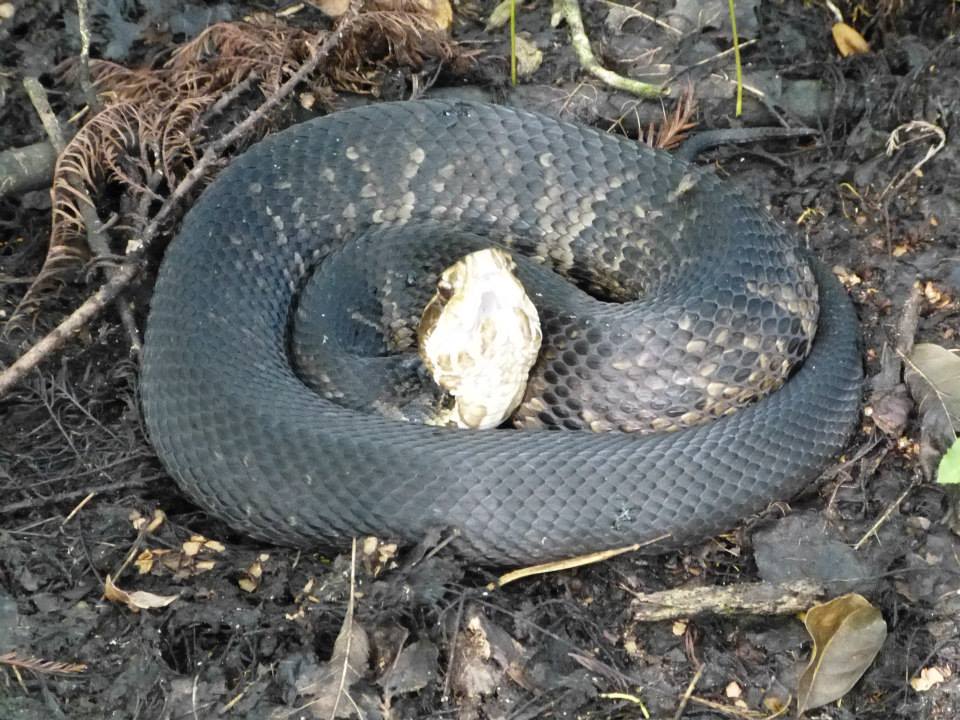
The swamp where we observe the orchids may be submerged in a few feet of water, or in one year the water came up to our waist. One another year during which it was completely dry we were intently looking up at the tree trunks to find the orchid when we happened to look down, and there immediately in front of Megan's feet was a large coiled cottonmouth, showing its white mouth agape.
The reason the ghost orchid’s presence is kept a highly regarded secret is that orchid thieves harvest these flowers, although they cannot be kept alive. One plant is said to have been sold for $5,000 on the black market. Author Susan Orlean wrote the bestseller Orchid Thief (1998), devoted to these elusive orchids, and despite going on guided quests to find the endangered orchid, Orlean never saw the orchid while writing her book. There is a movie based on this book called "Adaptation" starring Nicholas Cage and Meryl Streep, but if your interest is in learning about ghost orchids, don't bother seeing this film.