Blog No 34 California Condor Saved from Extinction


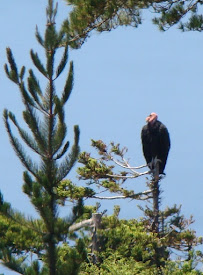
My first condor
The Passenger Pigeon was our largest and most colorful wild pigeon but became extinct when the last pigeon died in the Cincinnati Zoo in 1914. It was once the most abundant bird in North America. After the Civil War, these pigeons were observed migrating in gigantic flocks, numbering in the billions that darkened the skies for hours at a time in search for food and nesting sites. The advent of the telegraph made it possible to follow these flocks, resulting in wholesale slaughter by men with shotguns and the pigeons were sent by the newly laid railroad lines to the east for food. Its extinction was instrumental in Congress passing the Migratory Bird Treaty Act in 1918. In 1973 President Nixon signed the Endangered Species Act, which has been unjustly vilified over the years. Both of these legislative acts have been instrumental in saving many species from extinction. One beneficiary was the magnificent Whooping Crane whose numbers were steadily diminishing, beginning in the 1940s. These cranes winter on the Texas coast and migrate to breed in the wetlands and marshes of northwest Canada. With protective legislation, innovative reproduction techniques, and use of ultralight aircraft to teach migration, their population, once down to about 20, is now up to over 800 cranes.
But no American bird has seen a recovery so dramatic and controversial* as that of the California Condor, an ancient bird dating back over 2 million years to the Pleistocene epoch when megafauna dominated the the landscape. During the 1980s the number of California Condors was reduced relentlessly, primarily by lead poisoning from the vultures consuming animals shot by hunters with lead bullets. The US Fish and Wildlife Service argued for capturing the remaining condors and breeding them in captivity as the only means to preserve the species. The opposing view was led by the Audubon Society who advocated for leaving the remaining birds in the wild, and even took legal action to block the capture of the wild condors. When the number of wild condors decreased to only 6 birds, it became clear that drastic measures were necessary. With the capture of the wild condors, the total number of condors in the entire world was 27 (including those held captivity in the San Diego and Los Angeles Zoos.) California Condors were once thought to nest only every other year in the wild. Happily, when an egg was removed from a condor in captivity and hatched in an incubator, the female condor would lay another egg, sometimes laying up to 3 to 4 eggs in a breeding season, resulting in a rapid increase in the their numbers.
Biologists learned it was crucial that condors bred in captivity never see humans, and innovative techniques to prevent this were used including using Andean Condors as foster parents. Condors raised in captivity are not adapted to living in wild, so it was necessary that they were educated by adult condors that had lived in the wild. The young condors were places in a "pen" with the wild condors to learn the behavior of their wild mentors and then released. There are now about 400 condors living in the wild. Hunters are still resistant to using copper bullets instead of lead, and lead poisoning remains the greatest threat to condors today.
In 2012 I visited my son, Alec, who had enlisted in the Navy and was studying Farsi in Monterey, California. I drove along US 101 highway through Big Sur where condors were frequently seen and experienced the frisson of seeing my first California Condor in the wild sitting on top of a conifer tree! A bit further along the highway I was elated to see condors feasting on a dead whale down by the seashore. During covid, Michele and I stayed in the lodge (normally almost impossible to reserve) on the south rim of the Grand Canyon and although we saw no condors in the canyon we were treated with seeing many of these splendid birds on the Navajo Bridge over the Colorado River as well as at a nearby condor viewing site in Arizona.
Since its enactment, various administrations have weakened the Endangered Species Act, but the most devastating measures were recently enacted by the current administration. Once a species is lost, future generations will be forever deprived of their enjoyment.
Note: next blog will be on August 7 (gone to Hawaii to visit Wayne)
All photos by author unless otherwise noted
* Return of the Condor (2006) by John Moir
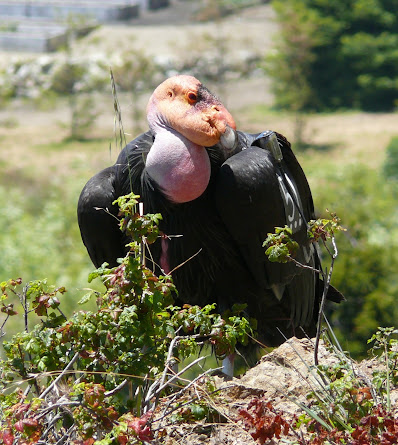
Adult condor with identifying number on left wing
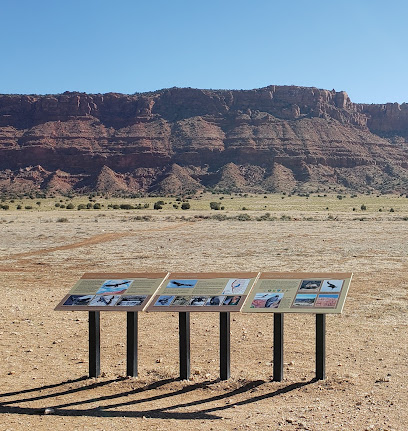
Condor viewing site, Marble Canyon, Arizona
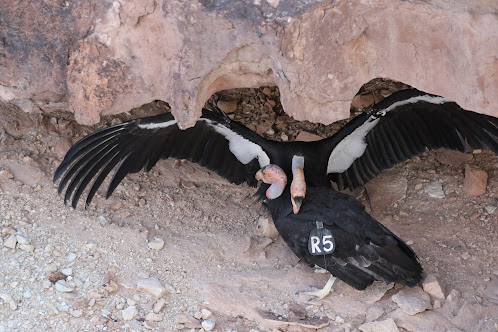
Courtship ritual in the cliffs above the Colorado River
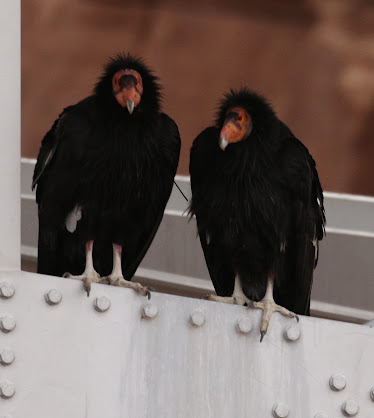
Pair of adult condors on the Navajo Bridge
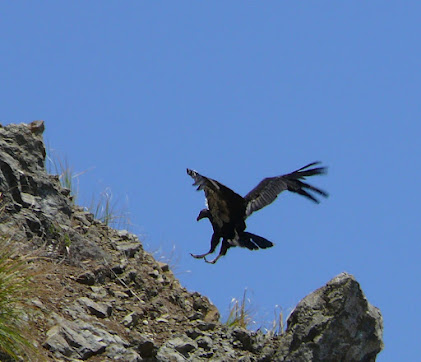
Juvenile condor--note black head (California coast)
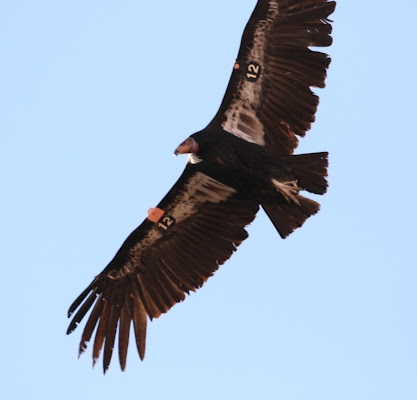
Adult condor No 12 (Arizona)
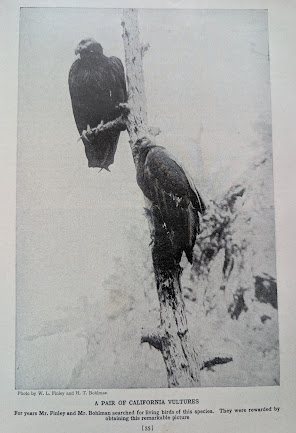
A photo from Birds of America (1936)