Blog No 3 Cotton Patch
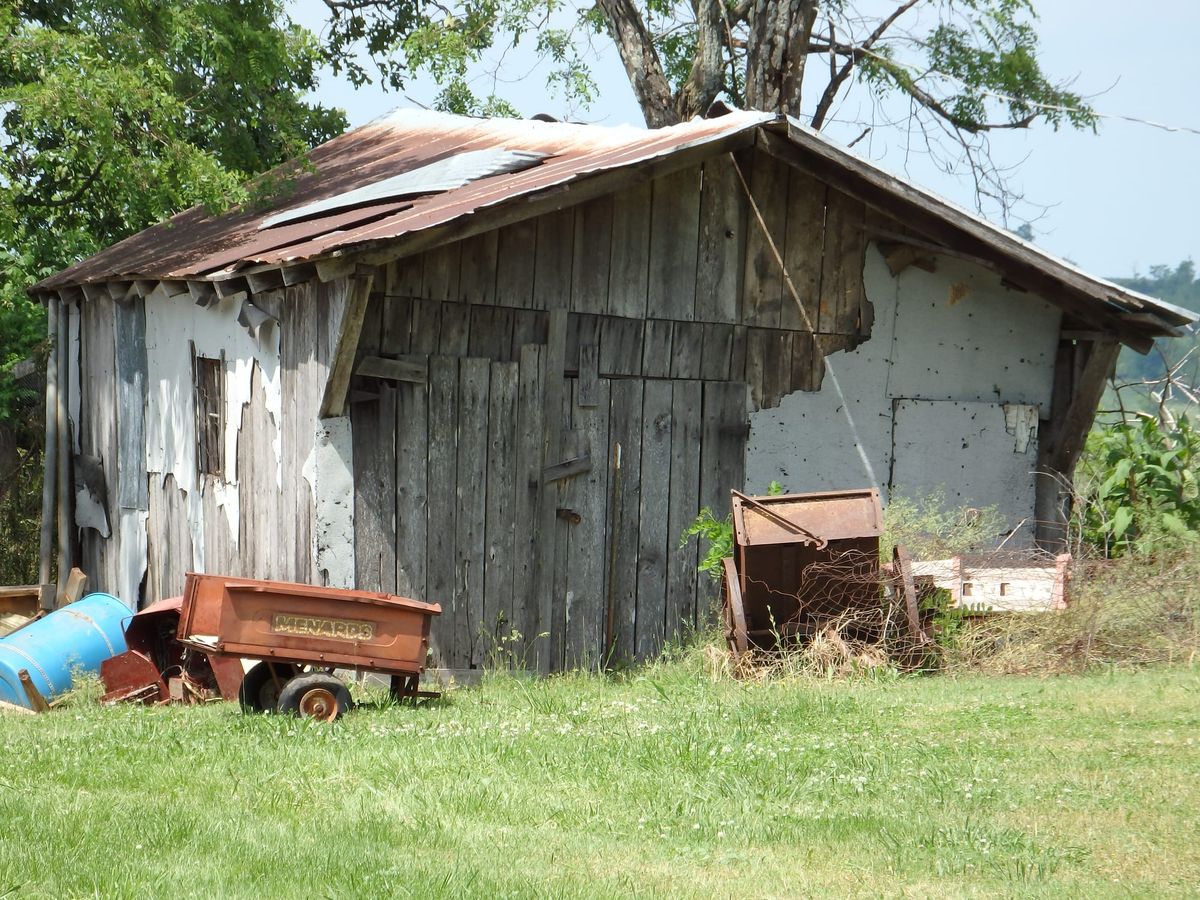
In the early 1950’s my parents, Old Order Amish, moved from southern Michigan to the Ozarks of northern Arkansas. They had found common ground with two other self-exiled families, the Rudy Wickey family from Ohio, also Amish, and the John Martin family from Pennsylvania, Old Order Mennonites. All made their living by farming.
A historically severe drought in the 1950s involved a large region of the Southwest and extended to norther Arkansas and stunted our crops. To augment our income, arrangements were made for our families to travel some two-hundred miles to pick cotton in the Bootheel district of Missouri near the town of Senath. The owners of the cotton fields arranged for a truck to come out to our homes, and we took enough of our belongings to get by for a few months, while picking cotton. The Stoll and Martin family shared a house and the Wickey family had their own abode nearby. There was a famous mansion in which the owner of the cotton fields lived.
My brother Alvin believes this took place in about 1953 or 1954 when he was about six, and I was around eight. Since I didn’t begin my diary until 1957, I cannot confirm the dates. Recently, when I spoke to Alvin he related two memories: he lost a front tooth while riding in the back of the truck, and he recalls picking cotton with our mom―she tugged a large sack behind her, and he had a small one. No one was too young to pick cotton, as my youngest brother, Garner, four or five, was picking cotton with Alvin when they got lost in the cotton field. Garner was crying, fearing the worst, until they found the group. We walked on hot sand between rows of cotton in a huge field dragging our sacks fastened to us by a shoulder strap. We were scratched by nettles and even the burrs that contained the cotton fibers had sharp edges that cut our fingers. We hung our sacks on a scale at the edge of the field, as we were paid by the pound. Sometimes we stopped to devour watermelons that were grown along the edge of the field. One of my fondest memories was getting off work early on a Saturday afternoon and after our mother came home from shopping for groceries, we feasted on an imitation ice cream called mellorine, made from vegetable and animal fats, and was cheaper than regular ice cream.
In the earlier years, our entire family including our parents left our home for a few months, while we picked cotton. Rudy Wickey, father of the Wickey boys, our best friends, house-sat for us during one year. Each fall mom would make catsup, boiling down the tomatoes in an enormous brass kettle. Rudy used her set-up and made catsup while we were gone, but apparently, his recipe called for the addition of chili peppers. After we got home and tried Rudy’s catsup there was a general uproar and people howled about the catsup being spicy. No one in our family cooked with hot peppers, but after I learned to like spicy food I can’t imagine a diet without it.
My brother David, just older than me, remembers he picked up to 100 pounds per day at 4 cents per pound. Fannie Martin was an exceptionally fast cotton picker, according to her sister Lizzie, and may have been able to pick between 300 to 400 pounds. David remembers seeing a TV while at Cotton Patch and that a non-Amish girl told him his English was better than the others.
In 1957, the last season that our family picked cotton, on September 11 our older siblings were picked up at 4:00 am and left for Cotton Patch and the younger half of our family stayed behind with our parents. We slept for a few hours and when we got up later, Alvin remembers our remaining family seemed small as we sat down to have breakfast that consisted of shredded wheat and milk. While they were gone, I made an occasional notation about the cotton pickers in my diary, but most of my entries reported on fights between roosters from our menagerie of exotic chickens we kept that year. Finally, on November 8, I wrote, “Cotton pickers came home from cotton patch.”
My parents were raised in an Amish church in southern Indiana where my father became an ordained minister by the ancient tradition of casting lots. They did not agree with certain long-standing practices of the Old Order Amish, such as rumspringa and using tobacco, so with other like-minded families, they moved to southern Michigan where I was born. Life in that community still did not meet expectations, so my parents made yet another move, this time to the Ozarks in northern Arkansas where we settled on farms and were joined by the Rudy Wickey and John Martin families, with whom they found common ground.
A historically severe drought in the 1950s involved a large region of the Southwest and extended to northern Arkansas where my family made a living by farming. The drought stunted our crops and to augment our income my dad made arrangements for our whole family to pick cotton in the Bootheel district of Missouri near the town of Senath. The owners of the cotton fields arranged for a truck to come out to our homes, and we took enough of our belongings to live in cabins for a few months while picking cotton. Other families in our community accompanied us.
My brother Alvin believes this took place in about 1953 or 1954 when he was about six, and I was around eight. I didn’t begin writing my little diary until 1957, so I cannot confirm the dates. Alvin lost one of his front teeth while riding in the back of the truck on our way to Cotton Patch. Alvin recalls picking cotton with our mom―she tugged a large sack behind her, and he had a small one. No one was too young to pick cotton. Both of us remember walking on hot sand between rows of cotton in a huge field dragging our sacks fastened to us by a shoulder strap. We were scratched by nettles and even the burrs that contained the cotton fibers had sharp edges that cut our fingers. After our sacks were filled we put them on a scale at the edge of the field, as we were paid by the pound. Sometimes we stopped to devour watermelons that were grown along the edge of the field. One of my fondest memories was getting off work early on a Saturday afternoon and after our mother came home from shopping for groceries, we feasted on an imitation ice cream called mellorine, made from vegetable and animal fats, and was cheaper than regular ice cream.
During the earlier years of picking cotton, our entire family including our parents left our home for a few months, while we picked cotton. Rudy Wickey, father of our best friends the Wickey boys, house-sat for us one year. Each fall mom would make catsup, boiling down the tomatoes in an enormous brass kettle. Rudy used her set-up and made catsup while we were gone, but his recipe called for the addition of hot chili peppers. After we got home and tried Rudy’s catsup there was a general uproar and people howled about the catsup being spicy. No one in our community cooked with hot peppers, but after I learned to like spicy food I can’t imagine a diet without it.
My brother David, just older than me, remembers he picked up to 100 pounds per day at 4 cents per pound. However, a good adult cotton picker could pick two or three times that amount and would have earned 2 to 4 dollars per day. David remembers seeing a TV while at Cotton Patch and that a non-Amish girl told him his English was better than the others. David wonders whether the cabins had originally been used by slaves to pick cotton.
During the last season our family picked cotton, on September 11,1957 our older siblings were picked up at 4:00 am and left for Cotton Patch and the younger half of our family stayed behind with our parents. We slept for a few hours and when we got up later, Alvin remembers our remaining family seemed small as we sat down to have breakfast that consisted of shredded wheat and milk. Periodically, I wrote in my diary that we had heard from the cotton pickers, but most of my entries reported on the fight between an exotic menagerie of roosters we had that year. Finally, on November 8, I wrote, “Cotton pickers came home from cotton patch.”