Blog No 40 New World Monkeys
My brother, Alvin, and I spent four nights recently at Sacha Lodge deep in the Ecuadorian jungle with no road access, arriving by a short flight from Quito to Coca, followed by a two-hour ride on a speed-boat down the Napo River, an immense tributary of the Amazon River. We docked at a staging area belonging to the lodge, and walked for 30 minutes through the rain forest. We then boarded a canoe and were taken along a canal that entered into a pristine lake on which the resort is constructed. During four days of intense birdwatching (see my Facebook post), our guides pointed out six species of monkey that live in the rain forest.
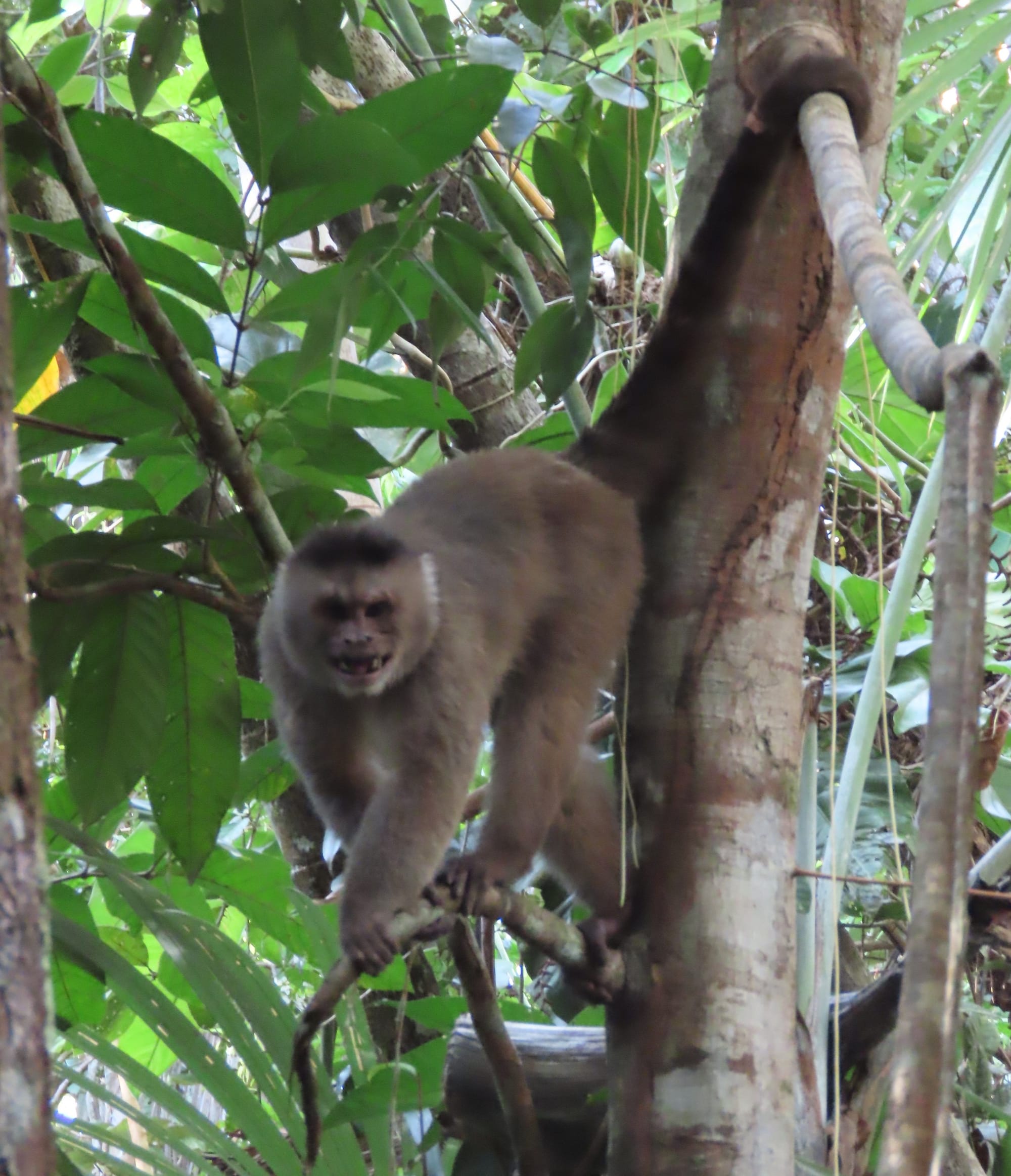
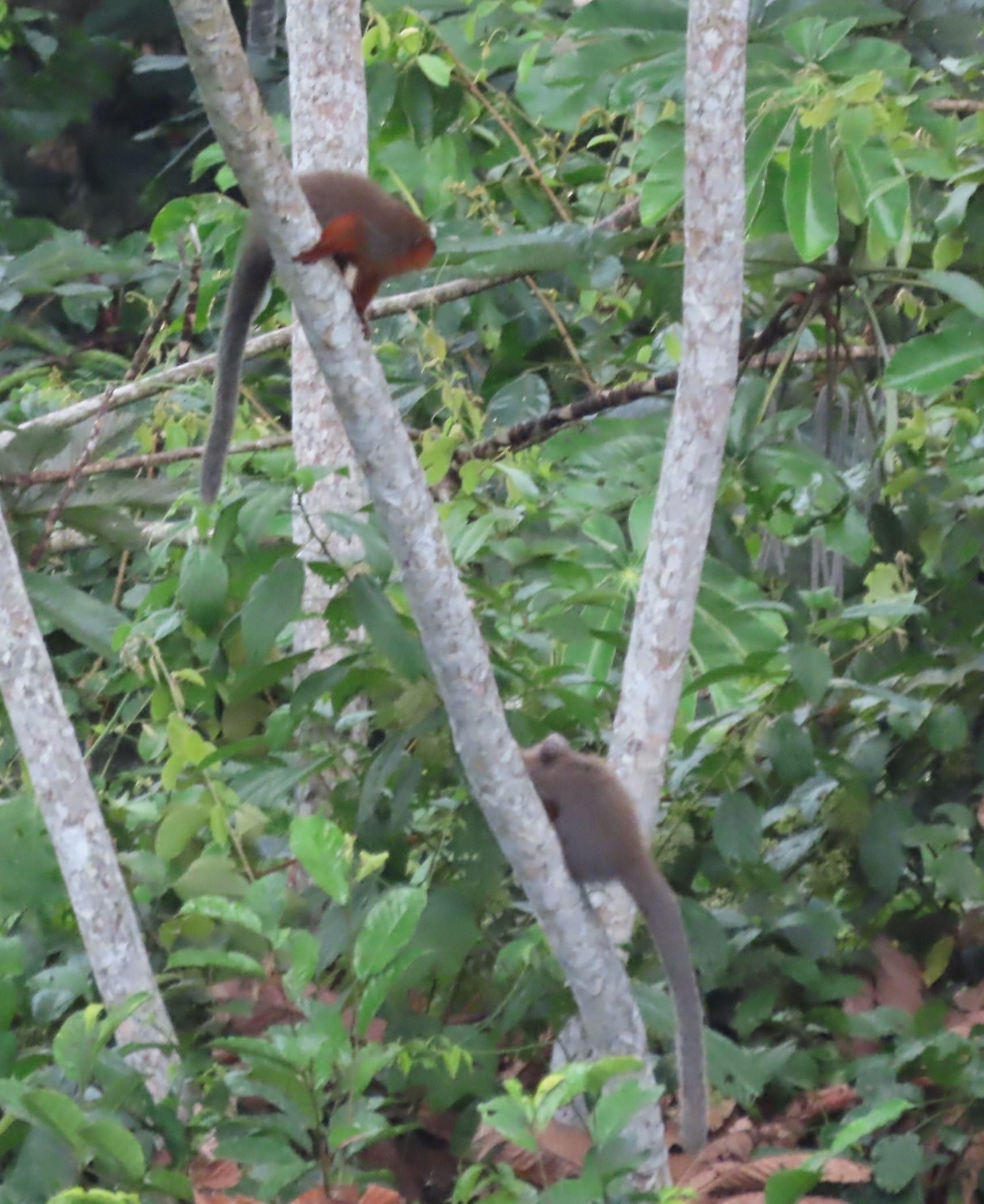
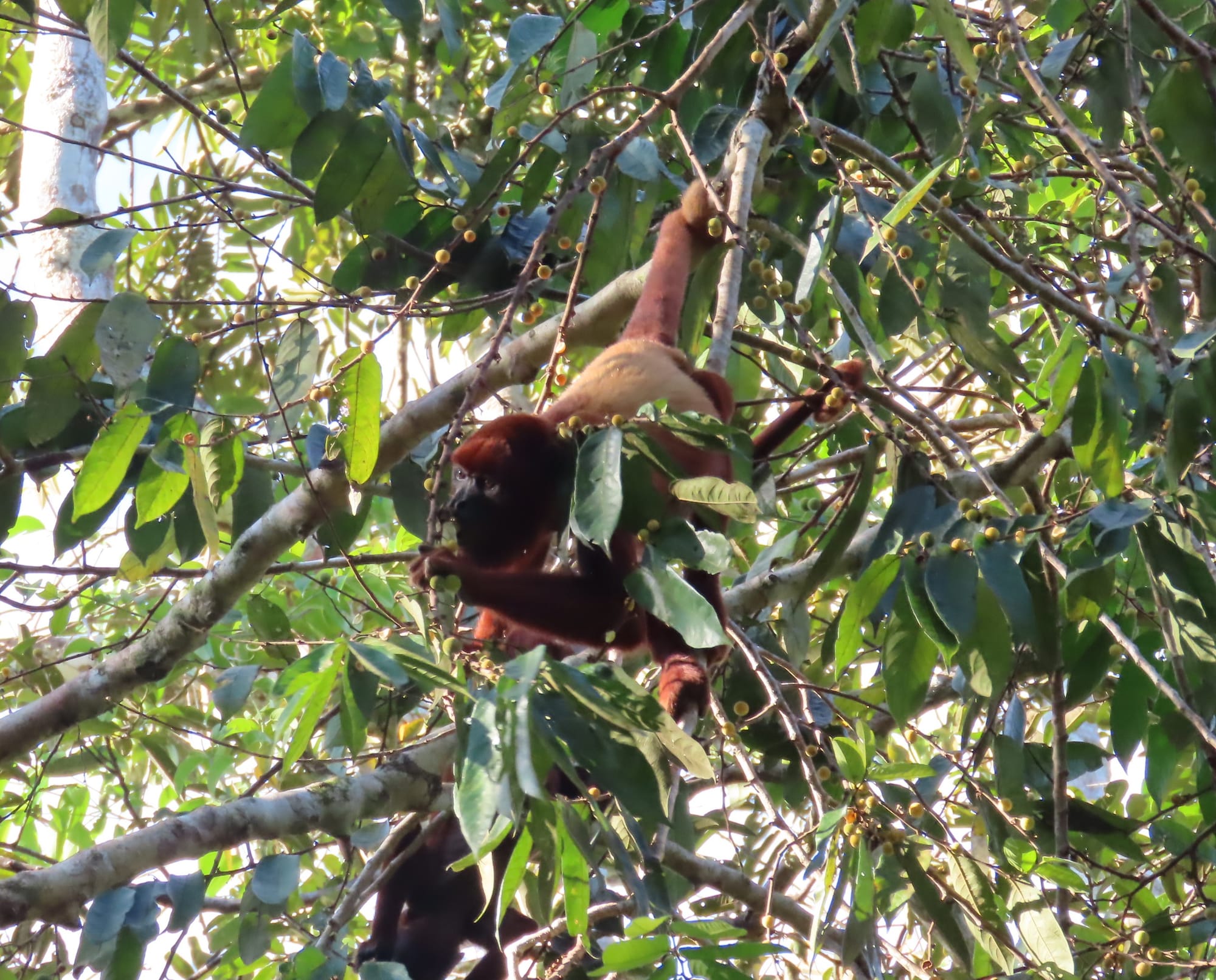
On the first full day of birding, we climbed a massive steel tower constructed in a gigantic kapok tree, over 140 feet above the jungle floor. We spent almost three hours at this splendid observatory, cataloguing tropical birds. Our guide pointed out reddish blobs in the upper branches of a tall tree in the distance that turned out to be red howler monkeys nestled together, asleep until about 10 o’clock. Our birding forays took us by canoe through canals and streams in the jungle, and on one day we hiked along narrow paths deep in rain forest. Although our primary mission was to see birds, encountering these delightful creatures that traveled in troops, and sailed from one tree branch to another, high above us, added a great deal to our experience. The primates acknowledged us by their calls; one showed an angry, disapproving face, but usually they just appeared inquisitive.
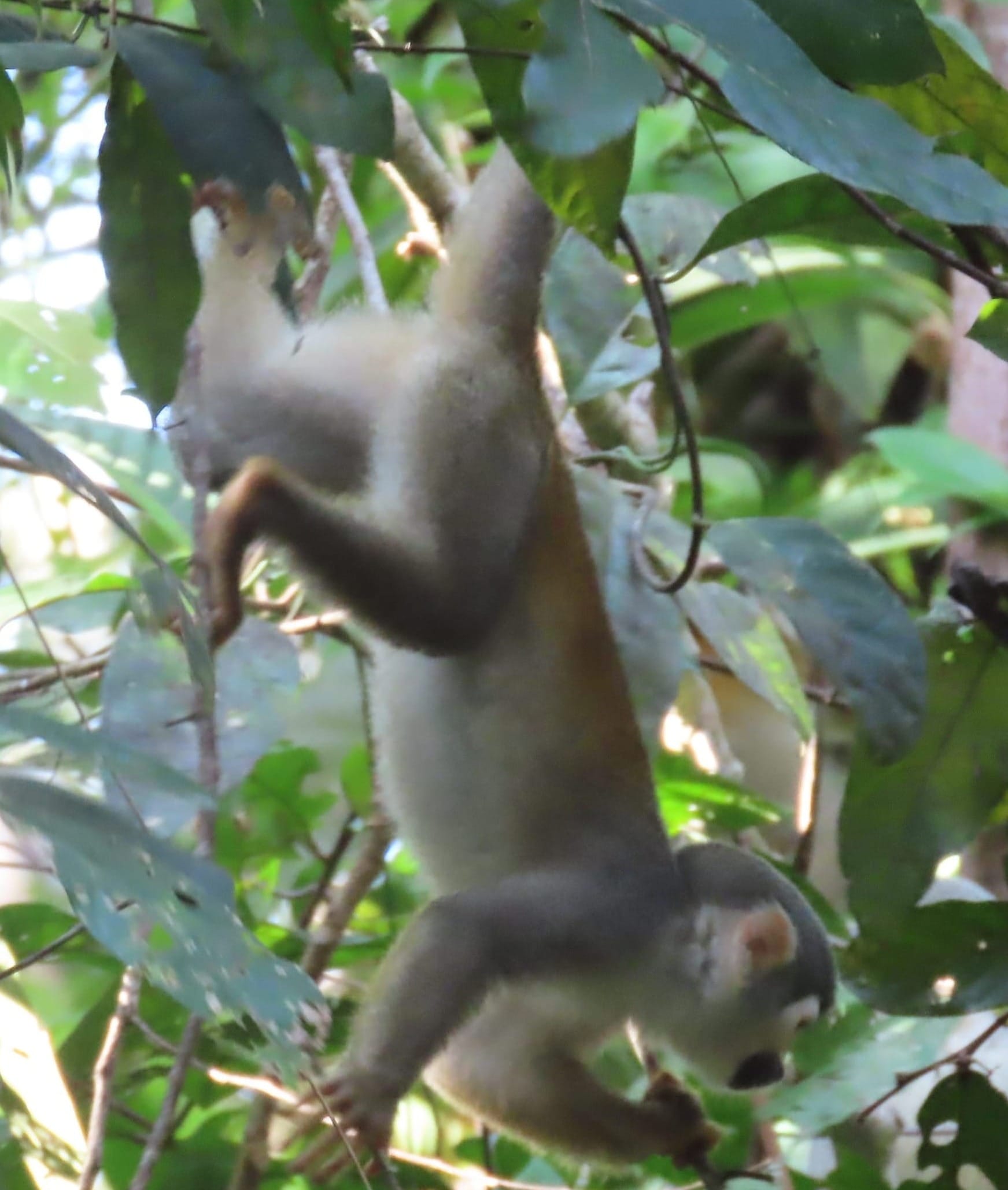
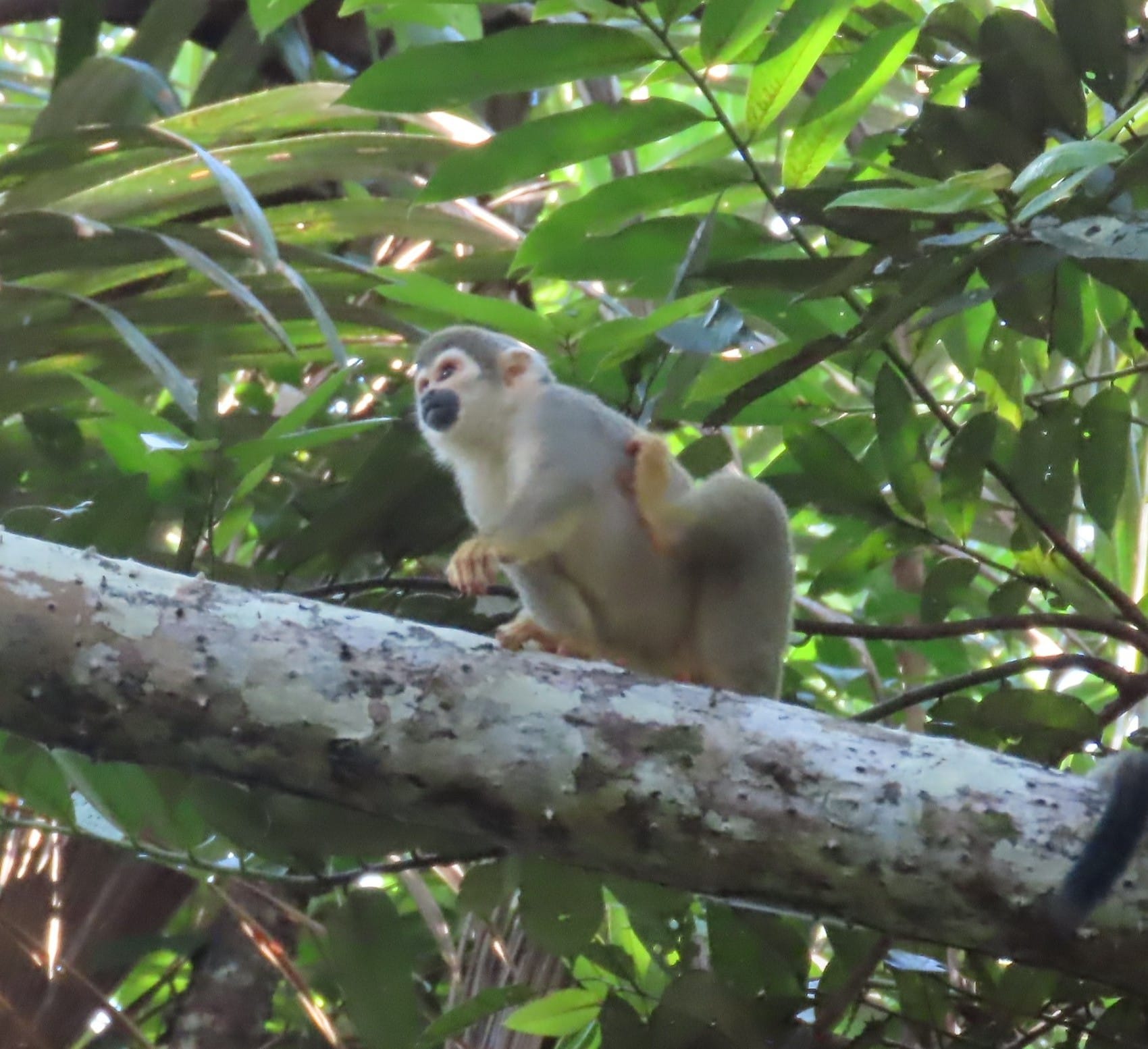
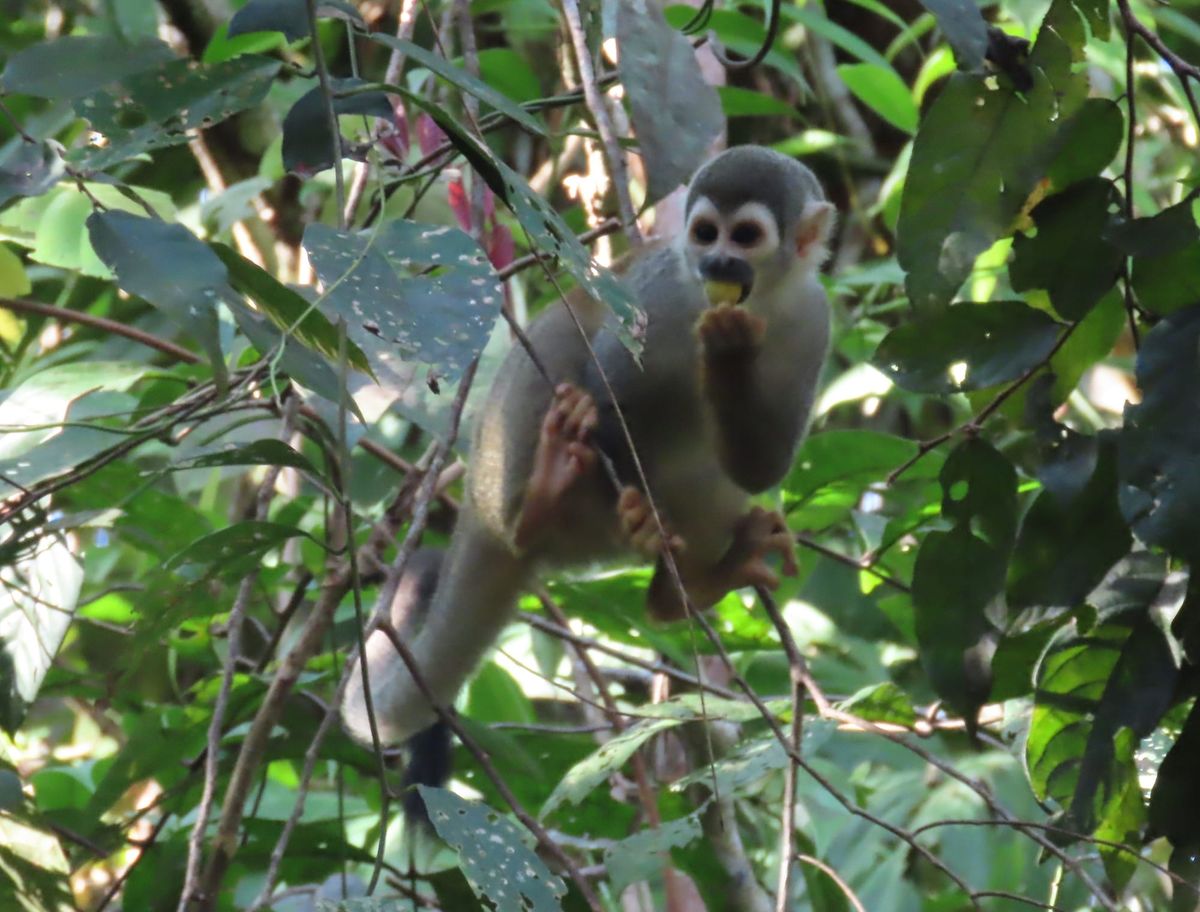
We were fascinated by a troop of white-fronted capuchins, larger and stronger, able to tear open palm nuts and bamboo shoots, while serving as sentinels, keeping an eye out for predators. They were accompanied by a much larger troop of squirrel monkeys, smaller and nimble, that swept through the forest, foraging for insects and fruit. During our forest walk, our guide pointed out a Spix's night monkey, holed up in a cavity in a tree. These nocturnal monkeys with huge, round eyes, are also called owl monkeys. The two species of monkey we observed but I was unable to photograph, are the black-mantled tamarin and Spix's night monkey.
New World monkeys (Platyrrhini) of which there are over 150 species are found in Central and South America, live in trees, and have flat faces with the nostrils on each side. Most have prehensile tails, but lack an opposable thumb, and tend to be smaller. Old World monkeys (Catarrhini) comprised of over 130 species are more diverse, live in rain forests, savannas, and mountain, and differ by their narrow noses, and possess an opposable thumbs, allowing them to manipulate objects.
By studying ancient fossil teeth and DNA, scientists have found evidence that the two groups became separated about 40 million years ago during the Eocene period. It is believed that New World Monkeys crossed the Atlantic on rafts of logs and trees when the distance between the two continents was shorter. Since then the two groups evolved in their separate ways, but they still have much in common with each other and with us humans.
All photos by author